


Commissioning
Building systems that demonstrably perform as intended
Through commissioning, we ensure that building systems are not only well designed, but also correctly installed, adjusted, tested and used, from design through to operation and maintenance.

What is commissioning?
What are the benefits of commissioning?
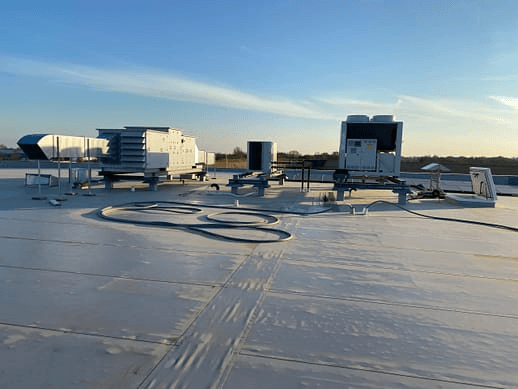
A building system can be perfectly designed on paper and still fail to function properly in practice. Commissioning is a structured and documented quality assurance process that verifies whether systems meet the performance requirements agreed in advance.
We look beyond individual components to focus on how systems work together. This includes HVAC, controls, electrical systems, plumbing and other building systems.
- Lower failure costs and less remedial work
- Better performance at handover
- Greater control over quality
- A smoother handover to facilities management
- Lower energy consumption through properly functioning systems
- Demonstrable performance assurance
The commissioning process

Define performance requirements and project objectives, and prepare the commissioning plan.

Review the design against the performance requirements and define verification and testing stages.

Check that systems are installed in accordance with the design and agreed principles.
Carry out functional tests, verify performance and adjust systems to their actual use.
Carefully hand over documentation, instructions and knowledge to facilities managers and users.
Monitor and evaluate performance, and optimise further where needed.
Independent quality assurance by the Commissioning Authority
The Commissioning Authority (CA) leads the commissioning process and ensures that the agreed performance is demonstrably achieved.
Depending on the project, the CA works with specialists in specific building systems. The approach, responsibilities, review stages and document flows are defined in advance in the Commissioning Plan.
Client

Commissioning Authority
Design team – installers – facilities management organisation
Commissioning plan
The Commissioning Plan guides the entire process. It sets out, among other things:
- Performance requirements
- Responsibilities
- Verification stages
- Test procedures
- Document flows
- Completion and handover stages
We tailor the scope of the plan to the size, complexity and ambitions of the project.
Which type of commissioning suits your building?
Every building and project has different needs. Commissioning can be applied in different ways, depending on your project’s stage and objectives.
01
Initial Commissioning
For new buildings and major renovations, with commissioning covering the project from design through to operation.
- Integration from the design stage
- Reviews during construction
- Testing and verification before handover
- A strong foundation for optimal operation
02
Retro-Commissioning
For existing buildings that have not previously undergone commissioning and whose current performance needs to be reassessed.
- Analysis of current performance
- Identification of problem areas
- Definition of improvement measures
- Demonstrable performance improvements
03
Re-Commissioning
For existing buildings that have previously undergone commissioning, with performance criteria and earlier documentation reviewed again.
- Evaluation of previous commissioning
- Updating performance requirements
- Retesting and verification
- Assurance of sustained performance

04
Continuous Commissioning
Continuous monitoring and optimisation during operation to maintain performance at the desired level.
- Continuous monitoring
- Data-driven optimisation
- Responding quickly to deviations
- Sustained performance improvements